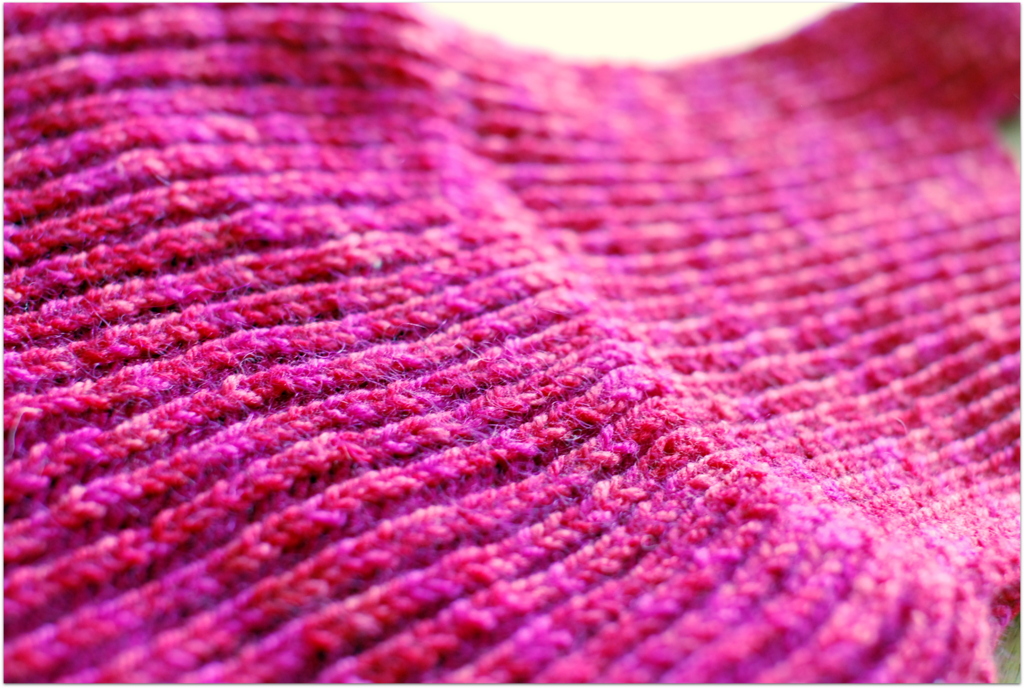
 Spinnvill flettevest from Pickles in Pickles extra fine merino. The pattern has a great fit, the yarn is airy, elastic and feels like cotton, but with 100% wool, mmmm....

Showing posts with label knitting. Show all posts
Showing posts with label knitting. Show all posts
2013-02-18
Wild wild vest
Spinnvill flettevest from Pickles in Pickles extra fine merino. The pattern has a great fit, the yarn is airy, elastic and feels like cotton, but with 100% wool, mmmm....
2012-06-15
International yarn bombing day
Today, June 9th, is the international yarn bombing day! What is your contribution?
As a baby's bottom...
Item: One strand booties and lettstrikka babylue from Nøstebarn
Yarn: Drops silkealpakka
Grams: 44 g
The one strand baby booties are simply brilliant. Easy to knit, excellent for small scraps, easy to make larger or smaller by using different yarns and needles. The trickiest part is to sew together the bottom of the bootie with kitchener stitch, but you'll get the hang of it in the end. I always use the Purl Bee Kitchener Stitch tutorial, it's great!
The hat is also a good pattern, nice and easy. Next time I'll probably knit the last half of it in the round, I prefer to minimize the required sewing in the end.
The yarn is a silk alpaca blend, 70% alpaca and 30% mulberry silk, soft and silky as a baby's bottom.

2012-06-11
How to knit calories
I once read that knitting requires more calories than just sitting, a big hurrah for those of us who can't sit in front of a tv without some knitting in our laps :)
Now, here's another idea for how to knit calories, inspired by my pilates class; do it on a gym ball!
Great for making skeins as well :)

2012-06-04
Oslo-in-my-heart-anorak
Item: Oslo anorak from Pickles
Yarn: Fritidsgarn
Grams: 301 g
 Again, I have cast on for the creativity contests at Pickles. Last time, I didn't finish my "Girls Gone Duplicate" in time for the deadline, mothering is a time-consuming business... But this time I just about had time enough to finish, lucky me! Because I made it through to the final, yippie! Here's some more snapshots of my anorak.


I've used a single thread of white Fritidsgarn as the main colour, and a triple thread of coloured Fritidsgarn for the tiny hearts. The hearts are knitted, not embroidered on afterwards. This makes a very thick and warm anorak, and the hearts that pop out are just adorable. The coloured edging along the rim of the hood is actually not crocheted or knitted, but embroidered with chain stitches. The pompom is made with a Clover pompom maker, a clever little thing.
Good luck to all you other finalists!
Lykke til, alle sammen!
2012-04-27
Grow your own onesie
Item: Benjamin's growing onesie and Little Coffe Bean Cardigan from Ravelry
Yarn: Lanett from Sandes Uldvare in turquoise and white
Grams: Onesie 75 g, Cardigan 113 g

 The growing onesie from Fragaria Bergin is a great pattern, it really grows with the baby. Soon outgrown by this little fellow, but it has certainly lasted a long time. Supercool buttons from Snella og Petronella!
A matching Little Coffee Bean Cardigan in stripes, this one will not be outgrown for a while, I think. A little twist on the edges, no ribbing here, just garter stitches for a couple of rows. White buttons in different sizes, a favourite of mine.

Yarn: Lanett from Sandes Uldvare in turquoise and white
Grams: Onesie 75 g, Cardigan 113 g


A matching Little Coffee Bean Cardigan in stripes, this one will not be outgrown for a while, I think. A little twist on the edges, no ribbing here, just garter stitches for a couple of rows. White buttons in different sizes, a favourite of mine.

2012-04-14
Spring delight
Item: Rullegenser from Nøstebarn
Yarn: 2-ply merino wool from Nøstebarn
Grams: 88 g
I'm invited to a spring birthday party, celebrating a 1 year old baby girl. There's nothing better than Nøstebarn's thin merino wool for those in-between-seasons garments. I like it even in the summer, especially the chilled Norwegian summer. This sweater is knitted on 2.5 mm needles, making a light, airy garment, sized for a 2-year-old. I always knit a big bitter than the intended recipient where children are concerned. Most of them grow, fast too.


Have to wrap up a present, but no paper? Use a scrap of yarn as a ribbon!
2012-03-31
Going for a drive
Item: Travel romper suit from the book "Myk start" with matching One-strand booties
Yarn: Alpaca "STERK" in turquoise, a loose, unspun alpaca in grey, both from "Du store alpakka"
Grams: 229 g
This romper suit is for those chilly days when a baby still have to go out for a drive. Something warm and snuggly to wear in the car seat is important, but as the car seat itself is very bad at ventilation, I find that most things make my baby too warm, making him very frustrated. This in turn makes for a very nerve-wrecking driving experience, a howling baby and hormonal mum is not the best way to ensure traffic safety...

 So I am using an alpaca blend, warm enough to keep him snug, cool enough to ventilate. The loose unspun alpaca is quite furry/hairy, so I gave the whole outfit a nice spa experience in the sink with hot water and "grønnsåpe" (soap) when finished, allowing it to felt a little bit. The result is a bit less furry.


Tiny duckling buttons make the outfit complete :)
Yarn: Alpaca "STERK" in turquoise, a loose, unspun alpaca in grey, both from "Du store alpakka"
Grams: 229 g
This romper suit is for those chilly days when a baby still have to go out for a drive. Something warm and snuggly to wear in the car seat is important, but as the car seat itself is very bad at ventilation, I find that most things make my baby too warm, making him very frustrated. This in turn makes for a very nerve-wrecking driving experience, a howling baby and hormonal mum is not the best way to ensure traffic safety...


Tiny duckling buttons make the outfit complete :)
2012-03-23
Men in tights
Item: Ullbukser fra Drops
Yarn: Katia Merino Sport
Grams: 145 g
A nice thick pair of tights, the kind Robin Hood and his companions would be proud of. Not itchy at all, thanks to extra fine merino. Knitted on needles size 5 mm, slightly larger than the pattern. Good pattern, with the additional ribbing along the sides of the legs, but I do find this sort of waistline quite slouchy when used for a while (almost even before being put to use). I am going to experiment with doubling my yarn with some thin elastic thread on my next project with a similar waist, using much smaller needles just for the waist as well.


2012-02-29
Girls gone duplicate
Item: Girl's reversible frock
Yarn: Baby merino from Gjestal in a painted pink&red&peach, and Kitten Mohair from Gjestal in hot pink
Grams: 123 g

 This is Pickles' reversible frock. A while back, they hosted an creativity contest with this pattern, and I eagerly cast on this frock with a combination of mohair and baby merino. The pattern creates a reversible frock, which allows the wearer to choose to show off the fancy mohair version or the ever-changing painted version.

However, I never got to participate in the contest, as I didn't finish on time. This mummy business sure takes a lot of time ;)
I did the yoke in simple ribbing with a reversed purl, which I always find creates a nice twisted finish. The hot pink mohair makes a nice touch to the inside (or outside) of the reversible dress. I love Pickles' idea of patent knitting with two different colours!
Yarn: Baby merino from Gjestal in a painted pink&red&peach, and Kitten Mohair from Gjestal in hot pink
Grams: 123 g
 This is Pickles' reversible frock. A while back, they hosted an creativity contest with this pattern, and I eagerly cast on this frock with a combination of mohair and baby merino. The pattern creates a reversible frock, which allows the wearer to choose to show off the fancy mohair version or the ever-changing painted version.

However, I never got to participate in the contest, as I didn't finish on time. This mummy business sure takes a lot of time ;)
I did the yoke in simple ribbing with a reversed purl, which I always find creates a nice twisted finish. The hot pink mohair makes a nice touch to the inside (or outside) of the reversible dress. I love Pickles' idea of patent knitting with two different colours!
2011-08-04
Pram goes retro
Item: Pram afghan
Yarn: Loads of different ones, all from the 70s, corduroy backing
 When I was a baby, my mother made this small afghan for me, intended as a cover for my pram, on top of the baby duvet. Isn't it gorgeous? Truly inspired, I think. It is primarily knitted, from loads of different yarns, some of them coloured with plant dyes by my mother herself. And the colours just pop, mostly reds and browns and oranges. And the backing is a brick red corduroy, matching perfectly!
And now it is passed on to my baby boy, when he decides to join us in January some time. His pram will be the hottest pram in town!

2010-09-14
Stars in mummy's eyes
Item: Baby jacket with accessories
Yarn: Baby merino from DROPS in buttery yellow and creamy white
Grams: 87 g
 A new baby means a new mum, and new mum usually has stars in her eyes whenever she is gazing at her new offspring.
This baby jacket will make sure that those stars are always there, using daisy stitches to create lovely borders for the bottom of the jacket, the sleeves and the hat.
 The creamy white and the buttery yellow is a perfect gender-neutral combination, and the yellow buttons match the yellow yarn perfectly, as though they were made for each other (lucky purchase, as I did not have a yarn sample with me to the button store).
The pattern is from Pickles, the Lazy Daisy baby jacket, with a few minor alterations to the amount of daisy stitches. I made the border at the bottom of the jacket thinner, and added borders at the bottom of the sleeves. The jacket, hat and booties are all knitted with circular needles (40cm), size 4.5 mm.

The hat was made without a pattern, just casting on a suitable amount of stitches. With daisy stitches, it is important that the amount of stitches can be divided by 3 + 2. For instance, you can cast on 77 stitches = (3 * 25) + 2.
Knit in the round until you have a suitable amount of rounds, enough to cover the baby's head from the baby's forehead to where flat top of the head starts. Then you are ready to start decreasing. For a baby's hat, I decrease quite rapidly compared to an adult's hat.
Now, yet another baby is soon ready to put stars in the new mother's eyes!
Yarn: Baby merino from DROPS in buttery yellow and creamy white
Grams: 87 g

This baby jacket will make sure that those stars are always there, using daisy stitches to create lovely borders for the bottom of the jacket, the sleeves and the hat.
 The creamy white and the buttery yellow is a perfect gender-neutral combination, and the yellow buttons match the yellow yarn perfectly, as though they were made for each other (lucky purchase, as I did not have a yarn sample with me to the button store).
The pattern is from Pickles, the Lazy Daisy baby jacket, with a few minor alterations to the amount of daisy stitches. I made the border at the bottom of the jacket thinner, and added borders at the bottom of the sleeves. The jacket, hat and booties are all knitted with circular needles (40cm), size 4.5 mm.

The hat was made without a pattern, just casting on a suitable amount of stitches. With daisy stitches, it is important that the amount of stitches can be divided by 3 + 2. For instance, you can cast on 77 stitches = (3 * 25) + 2.
Knit in the round until you have a suitable amount of rounds, enough to cover the baby's head from the baby's forehead to where flat top of the head starts. Then you are ready to start decreasing. For a baby's hat, I decrease quite rapidly compared to an adult's hat.
Now, yet another baby is soon ready to put stars in the new mother's eyes!
2010-08-30
Warm-a-wrist
Item: Hand wrist warmers with alternative ribbing
Yarn: Extra fine merino wool in "Mørk reinlav" from Pickles
Grams: 40 g
 Working with computers a lot can be quite hard on the hands. Particularly in the winter time, when the office gets chilly, a pair of hand wrist warmers is a treat, making it easy to use the keyboard and the mouse even though it's below freezing outside the window.
These hand warmers are made from non-scratchy merino wool, and are knitted in an alternative ribbing pattern, inspired by the Women's Hand Wrist Warmers pattern. Using a yarn that doesn't scratch too much is essential when making hand wrist warmers, as the wrists itch easily.

1 skein of Pickles extra fine merino was required to make the pair of hand wrist warmers, leaving a little. Each piece covers the hand from the knuckles some length passed the wrist, approximately 20 cm long in total.
Yarn: Extra fine merino wool in "Mørk reinlav" from Pickles
Grams: 40 g

These hand warmers are made from non-scratchy merino wool, and are knitted in an alternative ribbing pattern, inspired by the Women's Hand Wrist Warmers pattern. Using a yarn that doesn't scratch too much is essential when making hand wrist warmers, as the wrists itch easily.

1 skein of Pickles extra fine merino was required to make the pair of hand wrist warmers, leaving a little. Each piece covers the hand from the knuckles some length passed the wrist, approximately 20 cm long in total.
2010-08-10
Superfit baby hat
Item: Classic baby hat with a superb fit
Yarn: Silk Wool from Nøstebarn
Grams: 12 g
 This is my favourite style of baby hat, I've knitted a dozen of them. They are fun to knit, and fits a baby's head perfectly.
I've come across several different patterns, some are knitted in the round, harder to knit perhaps, but they require a minimum of sewing afterwards. Others are knitted back and forth, easier to knit, but requiring more sewing in the end.
This pattern is from Garnstudio, but knitted in a thinner yarn than the pattern says, shrinking the size down one or two sizes. This particular hat is for a newborn, and I always prefer knitting newborn clothing in the softest and most natural yarns, not imposing anything unnatural onto the precious little one.
Yarn: Silk Wool from Nøstebarn
Grams: 12 g

I've come across several different patterns, some are knitted in the round, harder to knit perhaps, but they require a minimum of sewing afterwards. Others are knitted back and forth, easier to knit, but requiring more sewing in the end.
This pattern is from Garnstudio, but knitted in a thinner yarn than the pattern says, shrinking the size down one or two sizes. This particular hat is for a newborn, and I always prefer knitting newborn clothing in the softest and most natural yarns, not imposing anything unnatural onto the precious little one.
A heart to give away
Item: Winged Heart Tattoo
Yarn: Pure new wool (Vestlandsgarn from Gjestal)
Grams: 30 g + stuffing
 Lots of my girlfriends are currently expecting babies, it's a regular baby boom out there. I always take care to make something special for the baby, something handmade that (hopefully :S) will be treasured.
It is not only the baby that is new to the world, the parenting role is also new to many of my friends. So why not welcome the new parents as well as the new baby?
So I've knitted this lovely heart, based on the Winged Heart Tattoo pattern by Jujube & Lolo. It reminds me a lot of the embroidery patterns in the fabulous embroidery books by Jenny Hart, Embroidered Effects and Sublime Stitching. Check out her cool website as well, Sublime Stitching.
I've altered the word in the tattoo, of course it has to be Norwegian, not English. Mamma! I stitched the letters after assembling the heart and the banner, even though the pattern says you should attach the banner first and embroider the letters, and then sew together the heart. I found it easier to attach the banner after the heart was stuffed, as it was easier to position the banner then. The pattern calls for felted wings, but I've skipped those in this case.
 The heart is stuffed with regular stuffing, but if I'd had any left, I would have added some dried lavender as well, which would add a lovely scent.
And to top it all of, a teddy, of course!
Yarn: Pure new wool (Vestlandsgarn from Gjestal)
Grams: 30 g + stuffing

It is not only the baby that is new to the world, the parenting role is also new to many of my friends. So why not welcome the new parents as well as the new baby?
So I've knitted this lovely heart, based on the Winged Heart Tattoo pattern by Jujube & Lolo. It reminds me a lot of the embroidery patterns in the fabulous embroidery books by Jenny Hart, Embroidered Effects and Sublime Stitching. Check out her cool website as well, Sublime Stitching.
I've altered the word in the tattoo, of course it has to be Norwegian, not English. Mamma! I stitched the letters after assembling the heart and the banner, even though the pattern says you should attach the banner first and embroider the letters, and then sew together the heart. I found it easier to attach the banner after the heart was stuffed, as it was easier to position the banner then. The pattern calls for felted wings, but I've skipped those in this case.

And to top it all of, a teddy, of course!
2010-06-08
Heather relish
Item: Heather Tribute Socks
Yarn: Lamb wool from Nøstebarn in colour 32 Lyng (Heather)
Grams: 37 g
 When I spotted the Tribute Socks at Knitty, I immediately knew that I wanted to have a go at knitting them. I even tagged it as a future yarn consumption here at the wild-grown yarn stash. The pattern requires a delicate yarn, and the lamb wool from Nøstebarn is just that, paired with double-pointed needles size 2mm.
2mm knitting needles are so delicate and thin that they easily bend. This time, I used the Symfonie Wood double-pointed knitting needles, they did bend a little, but not as much as the other brands I've tried at this size. I prefer wooden knitting needles, as they don't make as much noise when knitting. If anyone know of and can recommend some really wonderful knitting needles, especially in the smaller sizes, please post!
 The socks begin with a picot edging. The pattern instructs you to leave the edging "open", that is, to sew it together afterwards, when the sock is finished. However, I prefer to fasten the edging as I go along, saving me the job of sewing it together later. This is accomplished by folding the picot edging over, knitting each stitch together with a stitch picked up from the first row.
The pattern did have a bit of a ruining effect on the picot edging, as it made the edging a bit loop-sided. As you can see in the picture to the right, the front of the picot edging is higher than the side of the picot edging. Luckily, a proper blocking of the knitting will remove the loop-sidedness to some extent.
 What I really did like about this pattern, beside the lovely and intricate instep pattern, was the three stitches on each side of the heel flap that was knitted in garter stitch. It's not a big thing, but I've never done it before. Usually I just slip the first stitch of each round of the heel flap, creating big loops that is used later to easily pick up stitches when starting on the instep later on. However, this usually leaves me with noticeable gaps, because the loops are so big. But this method, knitting the first three and the last three stitches in garter stitch, leaves no noticeable gaps. However, it is somewhat trickier to pick up the stitches for the instep but still doable!

And the intricate pattern: it is simple lovely!
Yarn: Lamb wool from Nøstebarn in colour 32 Lyng (Heather)
Grams: 37 g

2mm knitting needles are so delicate and thin that they easily bend. This time, I used the Symfonie Wood double-pointed knitting needles, they did bend a little, but not as much as the other brands I've tried at this size. I prefer wooden knitting needles, as they don't make as much noise when knitting. If anyone know of and can recommend some really wonderful knitting needles, especially in the smaller sizes, please post!

The pattern did have a bit of a ruining effect on the picot edging, as it made the edging a bit loop-sided. As you can see in the picture to the right, the front of the picot edging is higher than the side of the picot edging. Luckily, a proper blocking of the knitting will remove the loop-sidedness to some extent.


And the intricate pattern: it is simple lovely!
2010-05-30
Cherry baby
Item: Cherry pink baby jacket and baby hat for infant
Yarn: Baby Merino from Gjestal Spinneri, superwash
Grams: 64 g (jacket) + 18 g (hat) = 82 g
 A childhood friend of mine is soon having her first child, and it is announced to be a baby girl!
Picking colours for knitting projects for a baby girl often means choosing pastel pink and lilacs, understandable, as they are very delicate and yummy colours, I think. But in this case, the mother of the baby girl is not particularly keen on pink! In fact, she can't stand it!
But as the brave (and very possibly foolishly so) knitter I am, I'm still venturing for a pink project. For once, I can be quite sure that the end result will look nothing like the rest of the baby girl's wardrobe, as pink probably will be shunned. But how on earth am I to lure this jacket and hat past the keeper of the wardrobe, i.e. the mother?
By using a vibrant mix of cherry, fuchsia, and coral, mixed together in a single lovely yarn! No baby pastels here, no pale pink and no luscious lilac!
 The project consists of a jacket and a matching hat. The pattern for the jacket is a very simple raglan sweater, knitted from the bottom up. The end result is a size 0 to 3 months, but probably only for the smaller range of babies. Raglans can be knitted both bottom-up and top-down. The top-down method is perhaps a little bit easier to use when knitting without a pattern, as you start with a suitable neck size, and continue increasing with the raglan technique, until the shoulder width suits its intended wearer. However, this particular jacket is knitted bottom-up.
 All the edgings of the jacket have a simple garter stitch edging, to match the hat. Two tiny buttons are sewn on, as a simple fastening, leaving most of the jacket open at the front.
The neck of the jacket is knitted in a different direction than the rest of the jacket. When finished with the required amount of decreases, I've continued the garter stitch edging from the front opening of the jacket up and around the neckline. In some patterns, similar edging is knitted separately and sewn on afterwards. I usually prefer to avoid as much sewing as possible, so I've fastened the edging by knitting one mask of the edging together with one mask of the neckline, one at the time, until the edging has worked its way all around the neckline, from one side of the front opening to the other, "eating up" every single mask of the neckline on its way.
 The hat is knitted in the well-fitting and I guess quite well-known "devil hat" design. When I say well-fitting, I mean two things: (1) The design creates an easily recognisable dip down to cover the baby's forehead, making it look a little bit as a the baby has horns (but only in a funny way, not a creepy way!). (2) The design fits the baby's head wonderfully, sticking on no matter what, and keeping every important part warm, both the head, the ears and the forehead.
So now you are very welcome to the world, baby girl!
Yarn: Baby Merino from Gjestal Spinneri, superwash
Grams: 64 g (jacket) + 18 g (hat) = 82 g

Picking colours for knitting projects for a baby girl often means choosing pastel pink and lilacs, understandable, as they are very delicate and yummy colours, I think. But in this case, the mother of the baby girl is not particularly keen on pink! In fact, she can't stand it!
But as the brave (and very possibly foolishly so) knitter I am, I'm still venturing for a pink project. For once, I can be quite sure that the end result will look nothing like the rest of the baby girl's wardrobe, as pink probably will be shunned. But how on earth am I to lure this jacket and hat past the keeper of the wardrobe, i.e. the mother?
By using a vibrant mix of cherry, fuchsia, and coral, mixed together in a single lovely yarn! No baby pastels here, no pale pink and no luscious lilac!


The neck of the jacket is knitted in a different direction than the rest of the jacket. When finished with the required amount of decreases, I've continued the garter stitch edging from the front opening of the jacket up and around the neckline. In some patterns, similar edging is knitted separately and sewn on afterwards. I usually prefer to avoid as much sewing as possible, so I've fastened the edging by knitting one mask of the edging together with one mask of the neckline, one at the time, until the edging has worked its way all around the neckline, from one side of the front opening to the other, "eating up" every single mask of the neckline on its way.

So now you are very welcome to the world, baby girl!
2010-05-16
Finally: socks for my boyfriend and nobody else!
Item: Blue boyfriend socks
Yarn: Vestlandsgarn from Gjestal, pure new wool (and fabulously inexpensive)
Grams: 113 g
 My boyfriend is usually never on the receiving end of my knitting efforts. This is not due to any lack of appreciation on his part, oh no, he craves new woolly socks quite frequently! You see, several of his old socks are worn so thin that they have been repaired several times.
So I guess there's a lot of readers out there who struggle with the same issue:
So much to knit, but so little time!
This little and common dilemma usually means that my boyfriend's need are last in line, only prioritised above my own needs on the woolly horizon. But this time I emptied my knitting needles and cleared my plate, and had a single goal in mind: woolly socks for my deserving boyfriend!
 The socks are knitted in a variegated yarn, making nice colour changes without having to change the yarn. I'm usually not a fan of this kind of yarn, but for casual everyday socks it's a great option.
The socks are a European size 43/44 on needles size 3.5 mm, for which I needed 113 g of yarn.
(And yes, these are the sexy feet of my boyfriend!)
Yarn: Vestlandsgarn from Gjestal, pure new wool (and fabulously inexpensive)
Grams: 113 g

So I guess there's a lot of readers out there who struggle with the same issue:
So much to knit, but so little time!
This little and common dilemma usually means that my boyfriend's need are last in line, only prioritised above my own needs on the woolly horizon. But this time I emptied my knitting needles and cleared my plate, and had a single goal in mind: woolly socks for my deserving boyfriend!

The socks are a European size 43/44 on needles size 3.5 mm, for which I needed 113 g of yarn.
(And yes, these are the sexy feet of my boyfriend!)
2010-05-13
Feeling blue, baby boy? Wear some stripes.
Item: Wannabe baby surprise sweater from Garnstudio
Yarn: Dale Merino baby woolin beige, baby blue, and sky blue
Grams: 163 g
 Knitting baby clothing from unusual patterns is always a treat to me. Naturally, since babies are tiny, their clothing is tiny as well, which makes it a quick knit.
This jacket pattern from Garnstudio is a twist on the ever-so-famous Elizabeth Zimmerman Baby Surprise Jacket. I've been planning to knit the real Baby Surprise jacket ever since I read about it the first time, but still haven't got round to it (it's still in my "Planned yarn consumptions" list, tututut). However, I came across this pattern, and by some mysterious inspiration decided to knit this first. Perhaps having something to do with taking a look at the original pattern for the EZ BSJ, and feeling a certain lack of motivation for interpreting a 40 year old machine-typed knitting pattern, however charming it might present itself?
 The twist of the Garnstudio pattern is that it is knit in two pieces, which are sewn together in the end, straight across the back of the jacket (from neck to waist). In other words, you'll knit each sleeve with it's half of the jacket separately, and sew them together afterwards. This technique allows for longer sleeves than the original EZ BSJ (the EZ BSJ only has three-quarter length sleeves), which is not a bad thing in Norway (even though we're headed for summer, it's still only 7 degrees celcius today, brrr).
The most interesting part is that you knit each half identical, and that one of the halves is reversed (i.e., inside-out) before sewing them together. This gave me some additional problem-solving to consider, as I wanted a stripy sweater. When knitting the to identical halves, I had to consider that in one half, the stripes had to be knit from the reverse. Not at all difficult, really, it's just important to remember this during the knitting. It's rather annoying to realise what's going to happen at sewing time ;)
 If you take care when sewing the two halves together and fastening loose ends, you'll actually be able to use the sweater inside out. Not very fancy-pancy if the sweater is knitting in one colour, but the stripy effect that comes from garter stitch with several colours is very nice on both sides, I think. Nice to have the possibility of variation!
 I knitted an attached I-cord along all the edges, This helps conceal fastening of loose ends. If you are knitting a garment that is to be reversible, it is always a good idea to change yarn on the ends of your knitting, rather than in the middle of a row. The attached I-cord also helps keeping the shape of the jacket, garter stitch easily stretches and can potentially ruin the shape of the jacket.
The size of this jacket came out rather bigger than imagined. It's a birthday present for my soon-to-be 1-year-old nephew, and by the current rates, it will still fit him on his second birthday.
So for my baby nephew: if you're feeling blue, wear some stripes, they'll keep you warm! Happy birthday!
Yarn: Dale Merino baby woolin beige, baby blue, and sky blue
Grams: 163 g

This jacket pattern from Garnstudio is a twist on the ever-so-famous Elizabeth Zimmerman Baby Surprise Jacket. I've been planning to knit the real Baby Surprise jacket ever since I read about it the first time, but still haven't got round to it (it's still in my "Planned yarn consumptions" list, tututut). However, I came across this pattern, and by some mysterious inspiration decided to knit this first. Perhaps having something to do with taking a look at the original pattern for the EZ BSJ, and feeling a certain lack of motivation for interpreting a 40 year old machine-typed knitting pattern, however charming it might present itself?
 The twist of the Garnstudio pattern is that it is knit in two pieces, which are sewn together in the end, straight across the back of the jacket (from neck to waist). In other words, you'll knit each sleeve with it's half of the jacket separately, and sew them together afterwards. This technique allows for longer sleeves than the original EZ BSJ (the EZ BSJ only has three-quarter length sleeves), which is not a bad thing in Norway (even though we're headed for summer, it's still only 7 degrees celcius today, brrr).
The most interesting part is that you knit each half identical, and that one of the halves is reversed (i.e., inside-out) before sewing them together. This gave me some additional problem-solving to consider, as I wanted a stripy sweater. When knitting the to identical halves, I had to consider that in one half, the stripes had to be knit from the reverse. Not at all difficult, really, it's just important to remember this during the knitting. It's rather annoying to realise what's going to happen at sewing time ;)
 If you take care when sewing the two halves together and fastening loose ends, you'll actually be able to use the sweater inside out. Not very fancy-pancy if the sweater is knitting in one colour, but the stripy effect that comes from garter stitch with several colours is very nice on both sides, I think. Nice to have the possibility of variation!
 I knitted an attached I-cord along all the edges, This helps conceal fastening of loose ends. If you are knitting a garment that is to be reversible, it is always a good idea to change yarn on the ends of your knitting, rather than in the middle of a row. The attached I-cord also helps keeping the shape of the jacket, garter stitch easily stretches and can potentially ruin the shape of the jacket.
The size of this jacket came out rather bigger than imagined. It's a birthday present for my soon-to-be 1-year-old nephew, and by the current rates, it will still fit him on his second birthday.
So for my baby nephew: if you're feeling blue, wear some stripes, they'll keep you warm! Happy birthday!
2010-03-25
Cables in Turqoise

Yarn: Alpaca yarn, mixed with Merino and Nylon for a more durable yarn (STERK from Du Store Alpakka)
Grams: 90 g
Alpaca is a natural fibre with several nice qualities. It is approximately three times warmer than wool, and its breathing abilities keep you warm when you're cold and cool when you're warm. In addition, the fibre is naturally rich in sulfur, a chemical substance that cleans the fibre when the garment is aired. Because of this, it's often adequate to hang the garment out to air rather than washing it. If a wash is required, always handwash with a suitable wool-friendly detergent. The Alpaca fibre does not contain any lanolin, making it hypoallergenic.

 This twisting technique is repeated every 3rd row all the way down the leg. Turn the heel, using reinforcement stitches. The twisting technique is continued on the instep, whilst the sole is in stockinette stitch. When starting the decrease for the toes, knit stockinette stitch on both the instep and the sole.
The decrease is stopped when a suitable number of stitches remains (usually something like 16 stitches), using a grafting stitch to graft the remaining stitches together.
Fasten ends and block the socks with lots and lots of steam . Blocking always makes a big difference to the end results, it usually makes all the difference.
Subscribe to:
Posts (Atom)